
[Image Description: A high-contrast graphic with a sunlit San Antonio green space background. Bold white text reads: "7 Questions to Ask a Holistic & Nature-Based Therapist in San Antonio Before Your First Session."]
Choosing to start therapy is a courageous act, but searching for the right practitioner can quickly feel overwhelming. If you’ve spent late nights scrolling through online directory profiles, trying to decode clinical acronyms, and wondering if a clinician will truly understand the complexities of your lived experience, you are not alone.
In our Complete Guide to Finding the Right Holistic & Nature-Based Therapist in San Antonio, TX, we explored how finding the right fit goes far beyond finding an open calendar slot or a convenient office location. True therapeutic alignment is about choosing a relational container—a space where your nervous system can settle, your identity is honored, and your whole ecosystem (mind, body, spirit, lineage, and land) is held with reverence.
When you schedule a free 15-to-30-minute discovery consultation, remember: you are allowed to interview your potential therapist. Therapy is a collaborative, reciprocal relationship, not a top-down clinical assessment where an authority figure analyzes you from above.
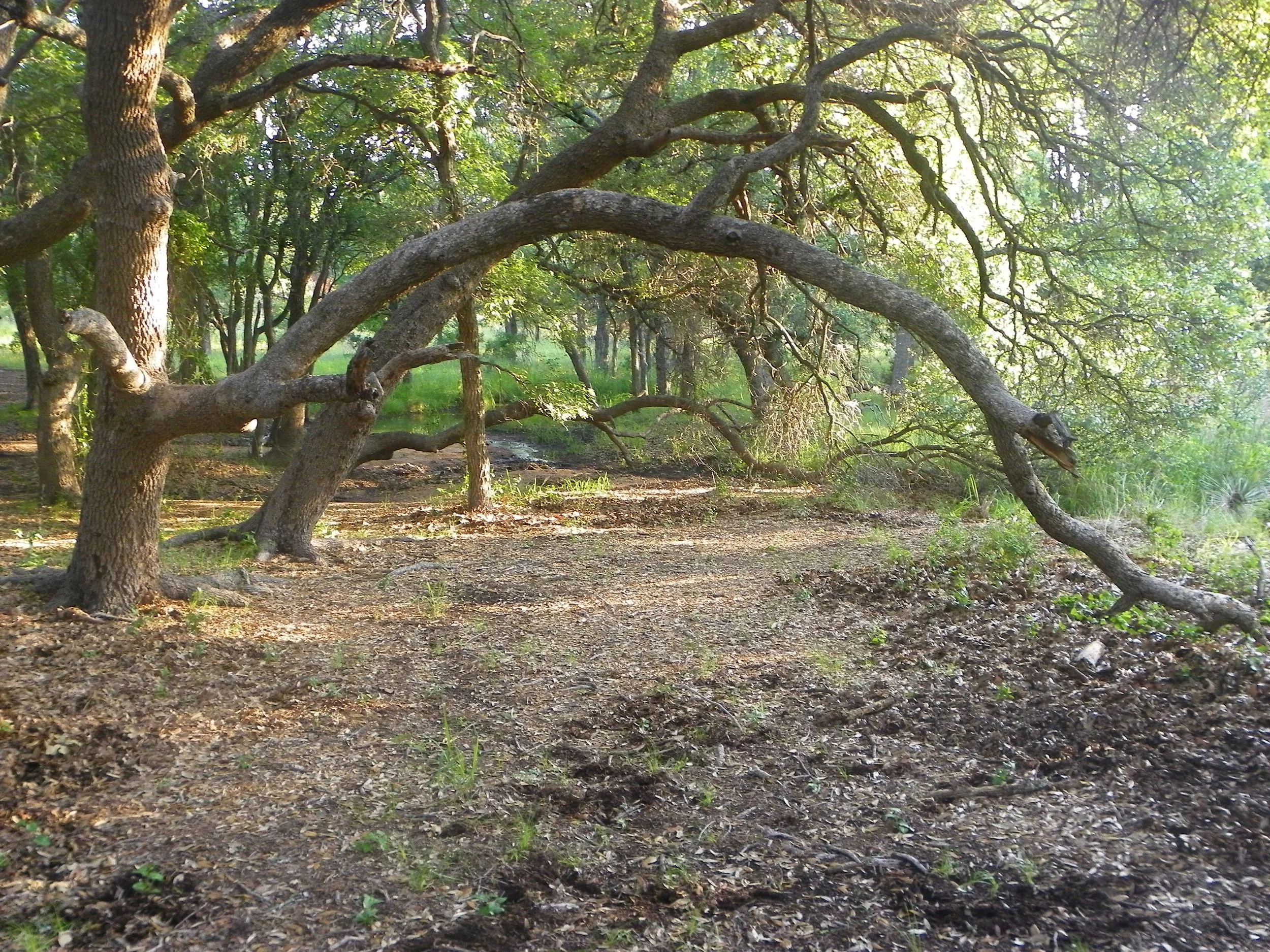
Beautiful Southern Live Oaks, which are common across San Antonio, Texas. These particular trees in the photo were found near Enchanted Rock during a backpacking trip.
To help you step into your consult calls with clarity, somatic agency, and confidence, here are 7 meaningful questions to ask a holistic, somatic, or nature-based therapist in San Antonio before booking your first session. 15-to-30-minute discovery consultation, remember: you are allowed to interview your potential therapist. Therapy is a collaborative relationship, not a top-down assessment where an authority figure analyzes you from above.
1. How do you incorporate the body, land, or nervous system into your work?
If you are seeking care that moves beyond traditional talk therapy, ask how the practitioner works with somatic and environmental awareness. Traditional Western psychology often treats distress as a purely intellectual issue contained strictly from the neck up.
A wholistic* therapist should be able to clearly explain how they help you track bodily sensations, channel and discharge nervous system energy, or engage with the living world. At Eutierria Therapy, for instance, we step outside the four-walled clinical box into local San Antonio green spaces like Woodlawn Lake Park or O.P. Schnabel Park—allowing the land herself to act as a sentient co-facilitator in your healing.
What to listen for: Listen for whether they describe specific, active ways of engaging your physical senses, moving stagnant energy, and tuning into the environment (such as breathwork, somatic movement, or land attunement) rather than just offering cognitive analysis in an outdoor setting.
2. What is your framework for working with systemic stress, oppression, and eco-anxiety?
Often, we seek therapy because we feel chronically overwhelmed, exhausted, or unable to quiet an anxious mind. It is easy to assume these feelings are purely personal flaws—that we just lack time-management skills, self-discipline, or emotional resilience. However, much of the stress we carry is not an isolated "you" problem; it is a natural reaction to navigating grinding economic demands, societal expectations, and systemic pressures.
To find out if a clinician understands this connection, you can ask a conversational prompt like:
"How do you incorporate a client's broader environment, cultural background, or systemic stress into your understanding of their burnout or anxiety?"
Pay attention to how they respond:
A systems-informed, anti-colonial therapist will articulate how macro-level pressures (such as workplace demands, cultural expectations, or social inequities) impact the physical nervous system. They will help you connect the dots between what you feel inside and the environment you navigate outside, validating that your burnout or grief is an intelligent response to a world in friction.
A purely individual-focused therapist may struggle to look beyond individual coping strategies or cognitive fixes, which can leave you feeling like your systemic exhaustion is just an individual defect to be fixed.
3. How do you hold space for my cultural, ancestral, or spiritual background without requiring me to constantly explain myself?
No therapist can know every nuance of every culture, nor should they pretend to. True safety isn't built on a clinician claiming "cultural competence"—it is built on cultural humility, a willingness to step into your worldview, adopt your language, and meet you in reciprocal dialogue.
Ask a prospective therapist how they handle cultural and ancestral differences during sessions. You want to gauge whether they create a collaborative exchange where your identity is honored, or if they force you to constantly translate, defend, or justify your reality through a narrow, white-centric lens.
A grounded, relationally focused therapist acts as a model: by bringing their own whole self, cultural background, and psychologies of place into the room, they teach you how to do the same. Look for a practitioner who recognizes that your cultural roots, family memory, and relationship to the land hold profound, irreplaceable medicine for your own healing.
4. What does the rhythmic flow of a typical session look like—both on the land and through the screen?
Every holistic practitioner structures their sessions differently. Asking about a session's flow helps ease initial tension and allows you to discern whether a therapist’s rhythm matches how you process, move, and honor your internal energy.
You want to listen for a balance between clear structure (so you feel safe and held) and relational flexibility (so you aren't forced into a rigid, clinical template).
When asking a prospective therapist about their session flow, listen for how they handle four core elements:
Pacing and Arrival: How do we open sessions? Do we jump straight into cognitive problem-solving, or do we take time to land, track physical sensation, and ground into the space, tuning in to where your body is holding energy today?
Practical Logistics for Outdoor Care: If you’re exploring land-based therapy in San Antonio, ask how they navigate real-world environments: How do we adapt for weather, intense summer heat, physical accessibility, and privacy in public parks like Woodlawn Lake or O.P. Schnabel?
Embodied Telehealth Integration: If you’re joining via virtual care across Texas or California, ask how they translate nature and somatic work through a screen: Do we integrate breathwork, gentle movement, or window-based environmental awareness so we can safely channel or discharge stagnant stress and so sessions don't feel like just another screen-time meeting?
Grounded Closure: How do we close our time together so I feel settled, anchored, and ready to transition back into your daily life rather than leaving raw and overwhelmed?
A grounded practitioner will be able to clearly describe how they co-create a container that feels safe, adaptive, and respectful of your body’s wisdom and energy on any given day.
5. How do you view and incorporate trance, altered states of consciousness, or sacred medicine work?
In dominant colonial psychology, altered states of consciousness are often viewed with suspicion or reduced strictly to a pharmaceutical fix. In Indigenous and earth-based worldviews around the world, however, trance-based learning is recognized as a natural, essential, and life-sustaining way of knowing. Entering altered states allows us to soften the ego's defenses, tap into spiritual energies, and engage in a holistic, place-based learning process guided by our bodies and the land.
Asking a prospective therapist about their relationship to trance-based or sacred medicine work helps you gauge whether they honor these earth-based ways of being:
If you are curious about sacred medicine like Ketamine-Assisted Psychotherapy (KAP): Ask how they approach this container. A grounded therapist won't just treat ketamine as a quick fix for neuroplasticity. They will hold it as a ceremonial space—combining intentional preparation, somatic support, and integration to help you safely step into an expanded state of consciousness, move stagnant energy, and engage deep existential or spiritual questions.
If they do not offer medicine work: Ask how else they facilitate trance or altered states of awareness. Sacred medicine is only one doorway into trance. Skilled nature-based and somatic practitioners facilitate trance-based learning through land immersion, rhythmic movement, breathwork, story medicine, and deep sensory attunement with the natural world.
Whether through the medicine container of KAP or the living presence of the land, look for a practitioner who treats these altered states not as something dangerous to be feared, but as a sacred, natural human capacity for learning, connection, and becoming.
6. How do we pause to reflect on our journey, and how will we know if our work together is actually "working"?
Healing is not a straight, predictable line; it is a non-linear, cyclical process that moves in dynamic rhythms. Because growth rarely looks like a simple upward slope, true "progress" in a relational framework cannot be measured by a rigid symptom checklist or an insurance diagnostic code.
Instead of asking a therapist how they "track" your progress, ask them how they build intentional moments of reflection into the work.
Think of it like hiking a mountain trail: sometimes the most profound perspective happens when we pause, turn around, and look at the landscape behind us—witnessing the terrain we have navigated, what we have put down, and what wisdom we are carrying forward into the unknown. A skilled holistic therapist helps you pause on the trail to take those "memory stamps" of your own growth.
When asking a prospective therapist how you will recognize movement over time, listen for signs of deep, embodied reflection, such as:
Greater Spaciousness and Presence: Feeling more anchored in your physical body rather than living entirely from the neck up.
Sensing and Channeling Energy: Moving away from chronic panic or overwhelm by trusting your visceral intuition (yotoro/gut and aniki/heart) to let energy move and discharge naturally.
Shedding Performative Armor: Setting clear boundaries and putting down heavy, colonial "masks"—like rigid stoicism, hyper-independence, or exhausting code-switching.
Restored Kinship: Experiencing a deeper, felt sense of connection to yourself, your community, your ancestral lineage, and the living earth.
Look for a practitioner who treats progress as a shared, reflective pause to honor your evolution.
7. What happens if I feel like we aren't the right fit after a few sessions—or if I outgrow our work together?
Decades of research and ancient relational wisdom agree on one fundamental truth: the therapeutic relationship itself is the single most powerful catalyst for healing. More than any clinical tool, modality, or technique, your felt sense of alignment, safety, and genuine connection with your therapist is what allows deep transformational work to occur.
Your therapy container functions as a living microcosm for how you relate to the world. It is a safe practice ground where you can navigate real-time relational dynamics—building trust, setting boundaries, speaking your truth, and practicing mutual respect—so you can embody those learnings out in your daily life, community, and environment.
Ask a prospective therapist how they handle fit, closure, and transitions:
Sovereignty in Choosing Alignment: You should never feel obligated to stay with a therapist simply because you started with them. If the relational "vibe," safety, or attunement isn't there, you have full sovereignty to seek a container that truly resonates.
Permission to Outgrow the Container: Healing is an evolving, non-linear journey. It is completely natural to reach a point where you have received what a specific therapist has to offer and feel ready to move on. Outgrowing a therapist isn't a failure, it is a sign of your growth. A relationally grounded clinician will celebrate your evolution without taking it personally.
Creation-Centered Care Over Ego: A relationally wise therapist recognizes that you are not an isolated individual to be "fixed"; you are a conduit for an intricate web of relationships (lineage, community, land, and creation). If the dynamic between you isn't serving your broader ecosystem of well-being, your therapist should welcome that conversation with warmth and offer trusted referrals to help you continue your path.
A good practitioner will always prioritize your sovereignty, relational health, and ongoing evolution over their own clinical ego.
What to Listen for in Their Answers
As you listen to a prospective therapist respond during your consultation call, pay attention to more than just their verbal answers. Listen with your entire body.
Notice your breath: Does your chest expand and settle as they speak, or do you feel a tightening in your stomach?
Notice their presence: Do they sound rushed, clinical, and detached, or unhurried, warm, and relationally present?
Notice your armor: Do you feel safe enough in their presence to drop performative masks, code-switching, and clinical jargon—and simply be human?
Trusting your visceral intuition—your gut (yotoro) and heart (aniki)—during this initial conversation is often the most reliable compass you have.
Taking the Next Step Toward Relational Care
Preparing a few thoughtful, intentional questions before your consultation puts somatic agency back into your hands. You do not have to carry life's heavy, colonial burdens alone, nor do you have to settle for care that asks you to leave parts of your identity, lineage, or relationship to the earth at the door.
Whether you are looking to step onto the land in San Antonio green spaces or connect virtually across Texas or California, rooted, anti-colonial support is available.
Ready to see how these questions land in real-time? Book a free discovery call with Eutierria Therapy today to explore what grounded, relational, and wholistic care feels like for you.
Author Bio
Javier Omar Meléndez-Vega, LCSW-S, is a Borikua trauma-focused ecotherapist, clinical supervisor, and founder of Eutierria Therapy. Based in San Antonio, Texas, Javier provides outdoor, land-based nature therapy locally as well as secure virtual telehealth throughout Texas and California. Drawing from Puerto Rican folk healing, somatic movement, and Indigenous relationality, he specializes in intergenerational trauma, eco-grief, capitalism fatigue, existential distress, and Ketamine-Assisted Psychotherapy for activists, healers, social workers, and socially conscious individuals. Learn more or schedule a free discovery call at Eutierriatherapy.com/contact.
———
*A note on spelling: I intentionally spell wholistic with a "W." Inspired by Indigenous scholars Renee Linklater (Rainy River First Nations) and Alice Olsen Williams (Curve Lake First Nation), this spelling represents true wholeness and inclusivity. It deliberately moves away from the root word "holy," which carries patriarchal power and specific religious connotations (Linklater, 2021). This inherent wholeness connects the individual directly to the collective.As psychologist Arthur W. Blume notes, "A truly [wholistic] approach to professional psychology would feature simultaneous effort to heal and empower individuals, their families, the larger social order, and the global community simultaneously by addressing both micro-level and macro-level psychological concerns," (Blume, 2020)
