
What to Expect in Land-Based and Somatic Therapy in San Antonio
From Virtual Preparation to Stepping onto the Land with Eutierria Therapy
If you are preparing for your first experience with land-based or somatic therapy, feeling a flutter of nervous anticipation in your stomach is entirely natural.
Stepping into care that moves beyond traditional talk therapy involves a unique layer of vulnerability. Land-based therapy invites us out of four-walled offices into the living world, allowing the local environment to act as a partner in healing. Somatic therapy turns our attention downward—moving away from purely intellectual analysis in the mind to listen to the physical sensations, stored tension, and wisdom held inside the body.
Because this approach is so different from standard clinical settings, it often brings up very real, understandable questions:
About the Land & Public Spaces:What actually happens during an outdoor session? Will strangers see or hear me? How do we protect clinical confidentiality in a public San Antonio park?
About the Body & Somatic Process:What if I’m disconnected from my physical body? What if I struggle to find the right words for what I’m feeling inside?
In our Complete Guide to Finding the Right Holistic & Nature-Based Therapist in San Antonio, TX, we explored how true healing requires a relational container—a space where your mind, body, spirit, lineage, and environment are held with deep reverence. And if you are still interviewing prospective clinicians, our guide on 7 Questions to Ask a Holistic Therapist Before Your First Session can help you step into those initial consult calls with somatic agency.
At Eutierria Therapy, taking your healing journey onto the earth is a deeply intentional and sacred process. In our practice, land is never treated as a superficial backdrop or a quick novelty, nor do we ever push you onto the land before your nervous system feels completely ready.
Stepping outdoors is an evolving partnership built on trust. Here is a transparent look at how we co-create safety, build relational rapport, and cultivate somatic attunement together—starting in the quiet container of virtual preparation and expanding gracefully onto the land in San Antonio.
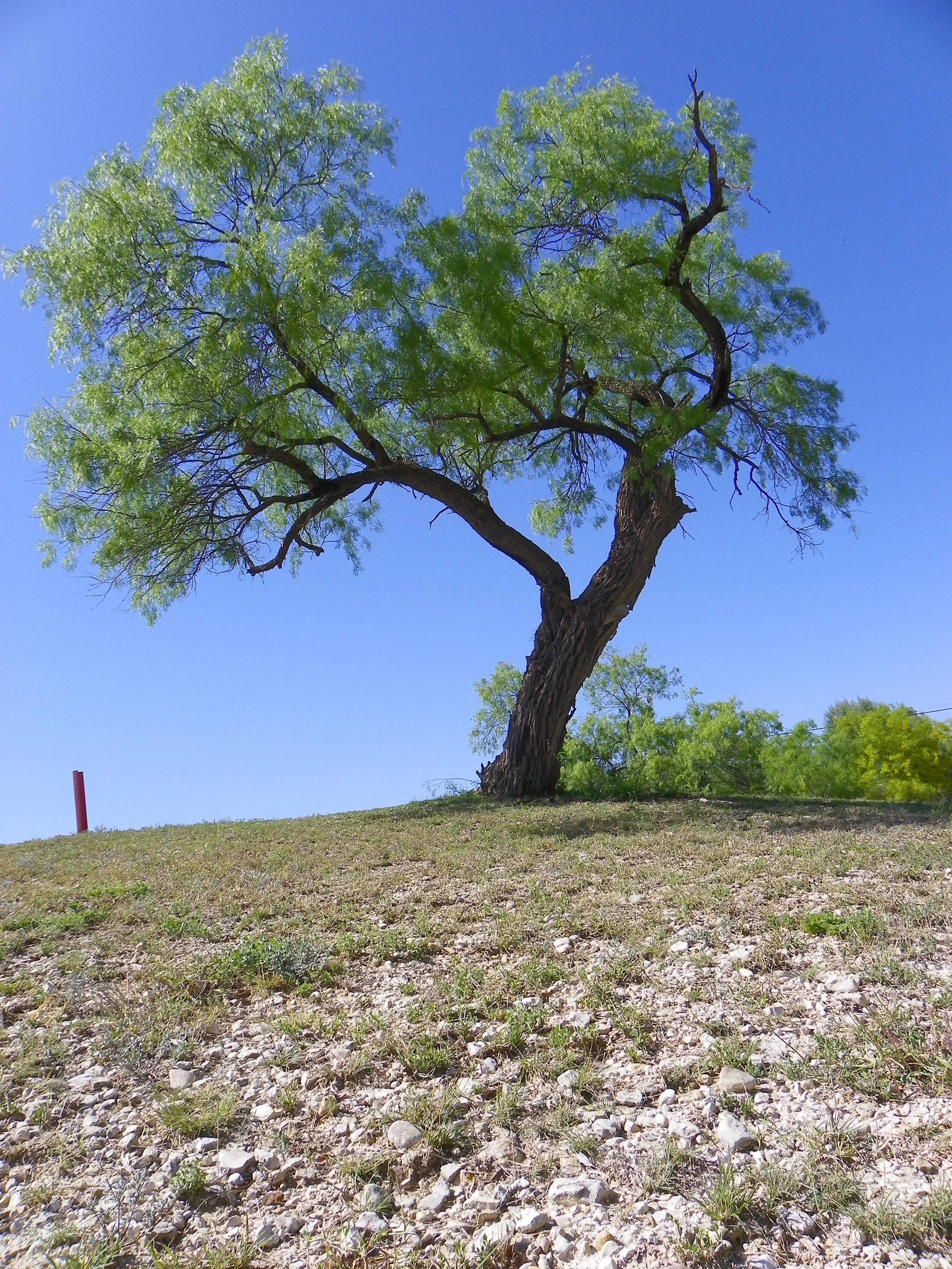
A common mesquite tree which can be found throughout San Antonio, TX. This particular tree was found in Del Rio, Texas.
Phase 1: Building the Foundation (Initial Virtual Preparation)
Before we ever set foot on the land together, our work begins with at least 3 to 4 virtual sessions.
Meeting virtually first allows us to build genuine relational safety, establish clear boundaries, and clarify why we are stepping outdoors. Moving therapy onto the land is an invitation to step out of a dominant, human-centered worldview and enter a kinship-based reality—a framework rooted in Indigenous psychologies and Borikua/Taino animistic traditions that recognize all life forms as sentient, intentional, and interconnected.
Through this work, we cultivate a deeper awareness of a fundamental truth: nature is not a passive backdrop to human life. While modern society often treats the earth as a static background or an inanimate resource, our practice tunes back into the living reality of the world around us.
When we step into a San Antonio park, we are stepping directly into a bustling, vibrant neighborhood of more-than-human relatives. This includes some of our oldest siblings—such as the ancient live oaks stretching overhead, or the waters flowing through the Edwards Aquifer beneath our feet—giving life to interconnected ecosystems of birds, cicadas, stone relatives, and soil. Every single life form carries its own history, its own story, and its own active, living presence.
Because entering this living community requires us to unlearn habits of distraction, speed, and detachment, we don’t rush ourselves onto the land. To help your system transition out of everyday hustle and step into this web of relationships with reverence, somatic safety, and humility, our initial virtual sessions focus on:
Uncovering Your Experiential Archetype: Instead of reducing your lived experience to a cold diagnostic label from a Western manual, we map your unique internal reality. We explore the internal paradoxes you are surviving, the operational friction or resistance holding you back, and the deep longings calling you forward. This creates a clear, shared direction and purposeful path for our work together.
Cultivating an Animistic & Kinship Lens: We examine your current relationship with nature and introduce place-based, Indigenous ways of knowing. Together, we begin moving away from rigid, Western hierarchies toward recognizing that the land, flora, and fauna are sentient teachers, co-facilitators, and medicine. We begin shifting from viewing the earth as a utilitarian object to experiencing it as a benevolent, living web of relationships.
Safety, Weather & Park Logistics: We review practical boundaries and environmental risk management. We discuss how we navigate Texas summer heat, rain, or sudden weather shifts, exploring how environmental changes themselves offer real-time lessons in adaptability and trust.
Boundary & Confidentiality Planning: We co-create clear, collaborative protocols for public park spaces—agreeing ahead of time on how we will protect your privacy, adjust our voices, or shift locations if passersby enter our shared space.
Phase 2: Stepping onto the Land (Your First Outdoor Session)
Once our virtual container is grounded and a clear, shared path forward is set, we transition onto the land. We meet in an accessible, living San Antonio green space—such as Woodlawn Lake Park or O.P. Schnabel Park—to put our shared agreements into practice.
The First 5 to 10 Minutes: Arrival, Orientation & Greeting the Space
When you arrive at our designated park landmark, our very first act is to intentionally slow down. In a traditional setting, you might walk through a clinic door and sit immediately in a chair. On the land, we honor the transition from the fast-paced, human world into the quiet rhythm of the natural environment.
We don’t rush straight into heavy emotional processing. Instead, we begin by orienting together:
Slowing the Pace & Sensorially Arriving: We walk slowly alongside one another, letting your nervous system transition out of San Antonio traffic. We begin tuning in with our physical senses—noticing the temperature of the air, the feel of the earth beneath our shoes, and the sounds of the park.
Finding Our Container: We move toward a settled, shaded space—often nestled beneath mature live oaks or near quiet water—hat naturally offers shade, physical comfort, and distance from busy walking paths or crowded areas.
Greeting the More-Than-Human Community: Before we dive into personal reflection, we take a collective pause to anchor into the spot we’ve chosen. We acknowledge the land itself and pay quiet respect to the other life forms—the birds, insects, trees, and soil relatives—sharing that immediate space with us.
Re-establishing Privacy & Safety: We check in on your immediate physical comfort and re-confirm our confidentiality plan. If passersby walk near our chosen area, we simply pause, lower our voices, or allow our attention to shift naturally until space opens back up.
The Heart of the Session: Bottom-Up Somatic Attunement
Once we have greeted the space and anchored into our surroundings, we enter the core of our time on the land.
If you have only experienced traditional talk therapy, you might be used to top-down processing—where the analytical mind immediately takes the lead to manage, diagnose, and intellectualize your experience from the neck up. While the mind is a valuable tool, jumping straight into analysis often skips the relational foundation of healing.
On the land, we prioritize bottom-up somatic processing. This is a practice of deep, relational listening. Rather than forcing the mind to tell the body how it should feel, we allow the body and the land to lead the conversation.
This relational listening unfolds across three core practices:
1. Reclaiming Your Somatic Language
Listening to the body requires learning how the body speaks. If tracking physical sensations feels unfamiliar or overwhelming, we take a gentle, modeling-based approach:
Beyond Clinical Vocabulary: While we can use simple language guides to distinguish between emotional feelings and physical sensations (e.g., a tight chest versus feeling anxious), words are only the surface level of communication.
Expressing Through Sound & Movement: Your body doesn't need to speak in perfect, coherent sentences. We make room for non-word-based expressions—sighs, sounds, facial expressions, postures, and gestures. We allow the body to give us its own natural language.
2. Tuning Internal States to the External World
We don’t process your internal weather in isolation; we notice how your body and nervous system are in continuous dialogue with the living environment.
How does your gut (yotoro*) or heart (aniki*) respond to the warmth of the sun on your skin, the wind moving through the live oaks, or the rhythmic hum of cicadas?
How does the stability of the earth beneath your feet offer a felt sense of support when carrying heavy grief, anger, or burnout?
3. Alchemizing Energy & Intentional Spontaneity
You are never required to sit rigidly in a chair or follow a rigid clinical script. How we move, channel, and discharge nervous system energy is deeply personal and intuitive:
Emergent Ceremonies & Rituals: When processing heavy emotional activation or systemic exhaustion, we allow the wisdom of your body and the land to co-create real-time, place-based rituals. This might look like walking along a shaded trail to move anxious kinetic energy, leaning against an ancient oak to release exhaustion, or pressing your feet into the earth to anchor high activation.
Serendipity as a Co-Teacher: While our work is guided by the structured principles of Eutierria Therapy, we leave intentional space for spontaneity. A sudden gust of wind, a falling leaf, or the movement of a bird can offer intuitive metaphors and profound clarity for the exact internal paradox you’re working through.
Phase 3: Grounding, Transmutation & Integration
We close every land-based session as intentionally as we open it. The final 10 to 15 minutes are dedicated to helping your nervous system settle, shift, and integrate so that you transition back into your day feeling rooted, clear, and whole, rather than raw or unanchored.
Because healing is a dynamic, energetic process, we don’t follow a rigid, one-size-fits-all closing script. Instead, we listen to the wisdom of your body and the land to guide how we seal our container.
The Return Walk: Bridging Back to Your Day
If our work took us deep into the park along a shaded trail or near quiet water, our return journey back toward our vehicles becomes an active, therapeutic part of our time together. We treat this return walk as a gentle transition—a physical buffer that allows you to slowly step out of the deep, reflective space of the land and begin re-orienting to the everyday world.
As we walk back together at an unhurried pace, we allow the rhythm of our footsteps to digest the insights, sensations, and emotional movements of the session before you get back behind the wheel in San Antonio traffic.
Energetic Alchemy & Real-Time Attunement
During those final moments on the land and along the path, we tune into your nervous system state to determine what energetic shift is needed:
Rooting & Routing High Activation: If our work brought up intense emotional charge, grief, or hyper-arousal, we engage in intentional grounding practices. We invite your body to channel that excess kinetic energy downward—letting the stability and gravity of the earth receive, hold, and absorb the intensity so your system can settle.
Revitalizing Stagnant Energy: If processing systemic burnout or heavy exhaustion leaves you feeling depleted or frozen, we utilize gentle breathwork, intentional movement, or sensory focus to stir stagnant life force (semi*). We cultivate a gentle, internal warmth to re-orient you to your surroundings.
Transmuting & Sealing the Container: We view nervous system energy as a living, magical force—something to be respected, listened to, and transmuting in real time. We close by honoring the land, expressing gratitude for the space and the more-than-human relatives who co-facilitated our session, and taking a final "memory stamp" of how your body feels in that moment.
You walk away from the land with an embodied, felt sense of integration that carries forward into your life, community, and daily relationships.
A Note on the Eutierria Therapy Framework
While nature-based care and ecotherapy have grown in popularity, what we practice at Eutierria Therapy extends far beyond standard "walk-and-talk" therapy.
Our work is guided by an anti-colonial, creation-centered framework designed to help you unmap systemic pressures, reconnect with your lineage, and reclaim your inherent wholeness. Rather than relying on rigid Western diagnostic labels, we honor your lived experience through your unique experiential archetype, cultivating a deep kinship with the living world around us.
By combining intentional virtual preparation with land-based somatic attunement in San Antonio, we ensure that every step you take on the earth is relationally supported, somatically safe, and deeply meaningful.
Taking the Next Step
Stepping onto the land is an invitation to unburden your nervous system, put down performative armor, and remember that you are part of a living, supportive web of relationships. You do not have to carry life's heavy burdens inside a closed room, nor do you have to navigate your healing journey alone.
Ready to explore what land-based and somatic therapy could look like for you?
Book a free discovery call with Eutierria Therapy today
to ask questions, explore park logistics, and begin your virtual preparation.
Author Bio
Javier Omar Meléndez-Vega, LCSW-S, is a Borikua trauma-focused ecotherapist, clinical supervisor, and founder of Eutierria Therapy. Based in San Antonio, Texas, Javier provides outdoor, land-based nature therapy locally as well as secure virtual telehealth throughout Texas and California. Drawing from Puerto Rican folk healing, somatic movement, and Indigenous relationality, he specializes in intergenerational trauma, eco-grief, capitalism fatigue, existential distress, and Ketamine-Assisted Psychotherapy for activists, healers, social workers, and socially conscious individuals. Learn more or schedule a free discovery call at Eutierriatherapy.com.
———
*A quick note on these words: Throughout this piece, you may have noticed some words that were translated into Hiwatahia, which is a revitalized Taino language I am currently learning. Incorporating Hiwatahia into my writing and daily conversation is a conscious effort to decolonize my language and ground my practice in indigenous reclamation.
