
Guest Author: Juanita Viera, LCAT (Licensed Creative Arts Therapist)
Introduction: When talking isn't enough
Imagine heading outside after a difficult week at work, noticing the shapes of fallen leaves and enjoying the fresh air. Sometimes we know we're overwhelmed but can't explain why. Nature can offer a setting for slowing down, noticing, and reconnecting with ourselves. Creative expression can help us explore feelings that are difficult to articulate.
As a Nuyorican raised in the Bronx, I've always been drawn to the arts as a form of expression, exploration, and connection. Growing up between cultures, I came to appreciate how creativity could offer a space to explore identity, emotions, and experiences that weren't always easy to put into words.
Nuyorican culture has a rich history of artistic expression through salsa, hip-hop, graffiti, poetry, dance, and community art.
From visual art to music and movement, creative expression has been a meaningful part of how I connect with myself and the world around me. As I eventually pursued a career in creative arts therapy, I became increasingly interested in how the arts could support others in developing that same capacity for self-expression, reflection, and transformation.
What is art therapy, and how does it work?
Art therapy is a mental health profession that integrates creative processes, psychological theory, and psychotherapy. (American Art Therapy Association).
It's not an art class, and you don't have to be talented, skilled or artistically trained to create art.
Clients may use drawing, painting, collage, clay, sculpture, and found objects or natural materials.
The creative process can support relief, emotional expression, reflection, and self-understanding.
Art-making creates something tangible that we can observe, discuss, revisit, and sometimes transform.
Clinical example: Someone experiencing anxiety creates an image of their inner critic, then makes another image representing what that part needs to feel supported.
What is eco-art therapy?
Eco-art therapy brings creative expression into relationship with the natural environment. It can involve outdoor art-making, natural materials, ecological themes, and reflection on our relationship with the land.
The environment becomes more than a setting; it becomes part of the therapeutic container.
Natural processes—growth, decay, cycles, seasons, regeneration—can offer metaphors for our emotional lives.
Three creative exercises inspired by nature
Nature mandala: Finding your center
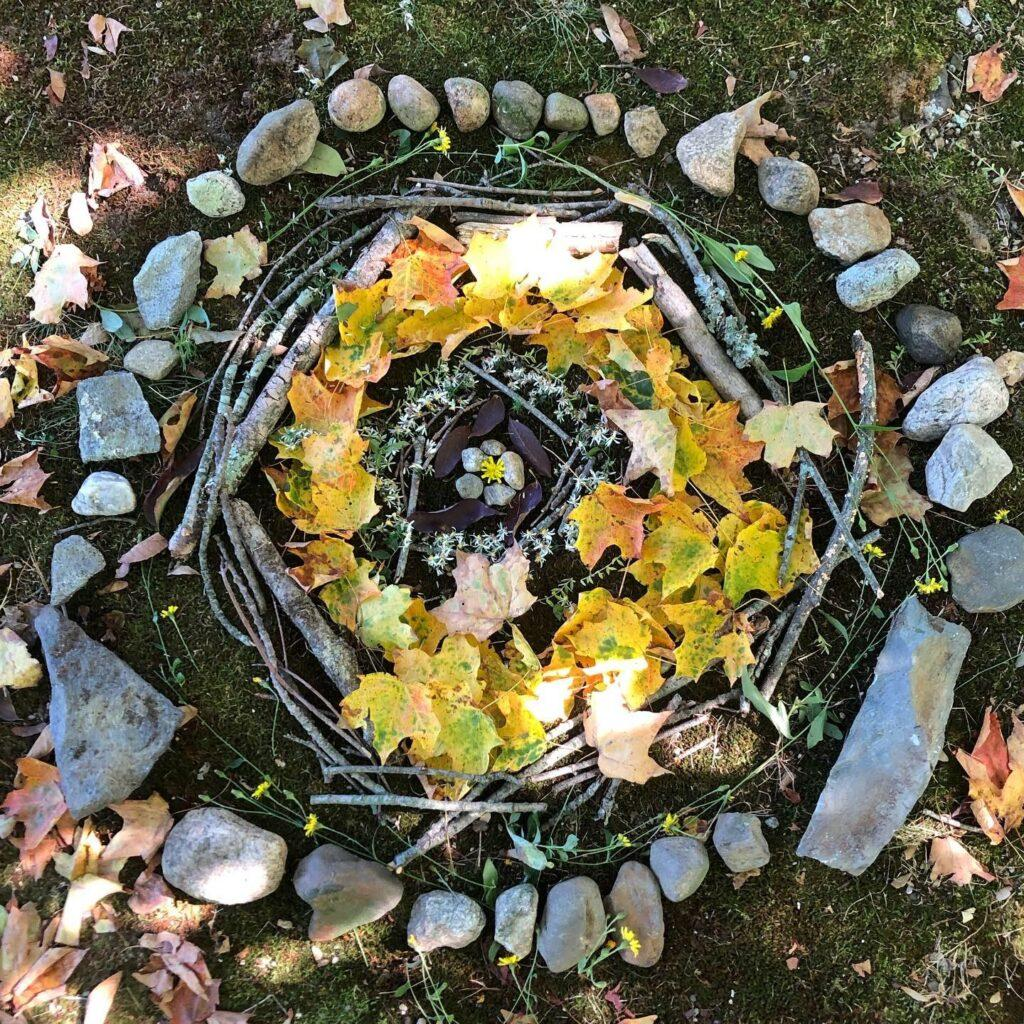
Collect fallen leaves, stones, and twigs, and arrange them into a circular pattern. Notice what you place at the center, what surrounds it, and how you feel as you create.
Leaf Rubbings: Noticing what we overlook
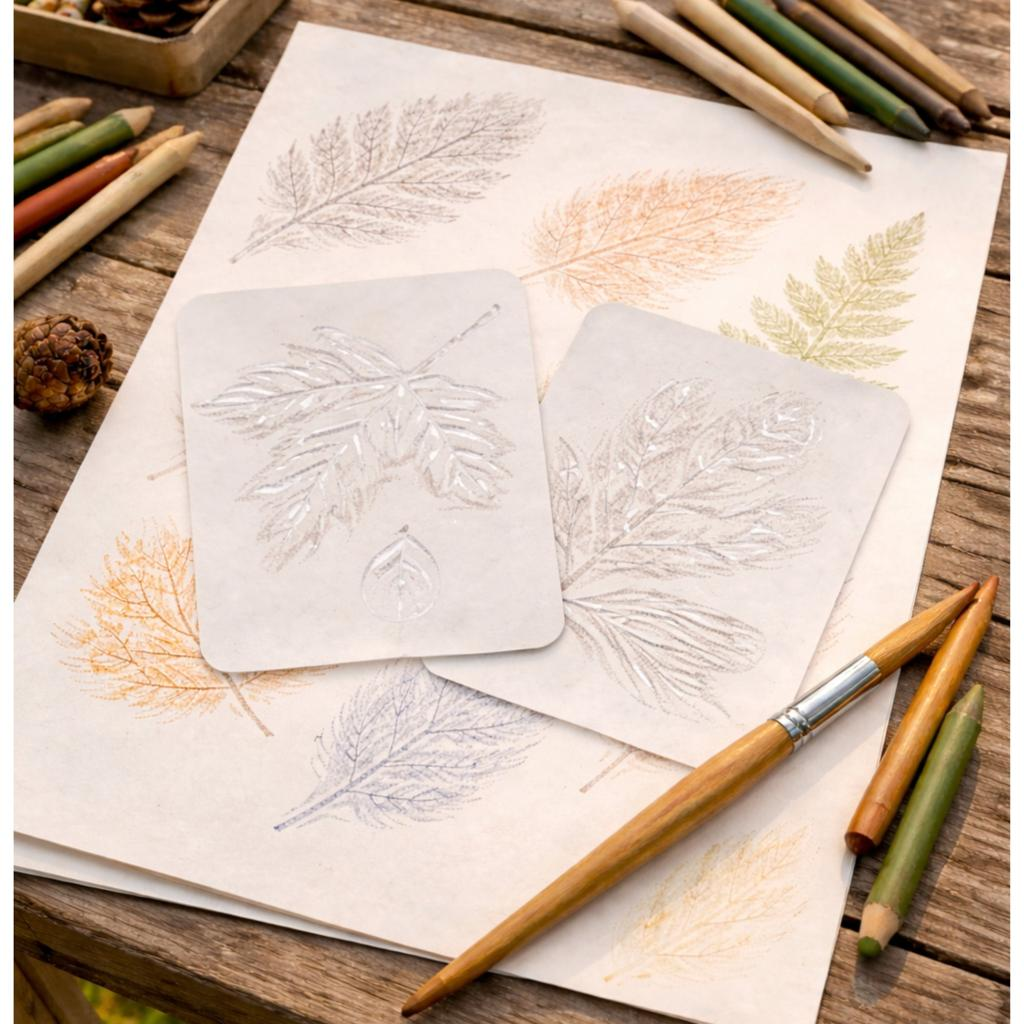
Place paper over fallen leaves and use a crayon to reveal their textures. Reflect on the details you normally miss and what happens when you slow down.
Roots and branches: Exploring resilience
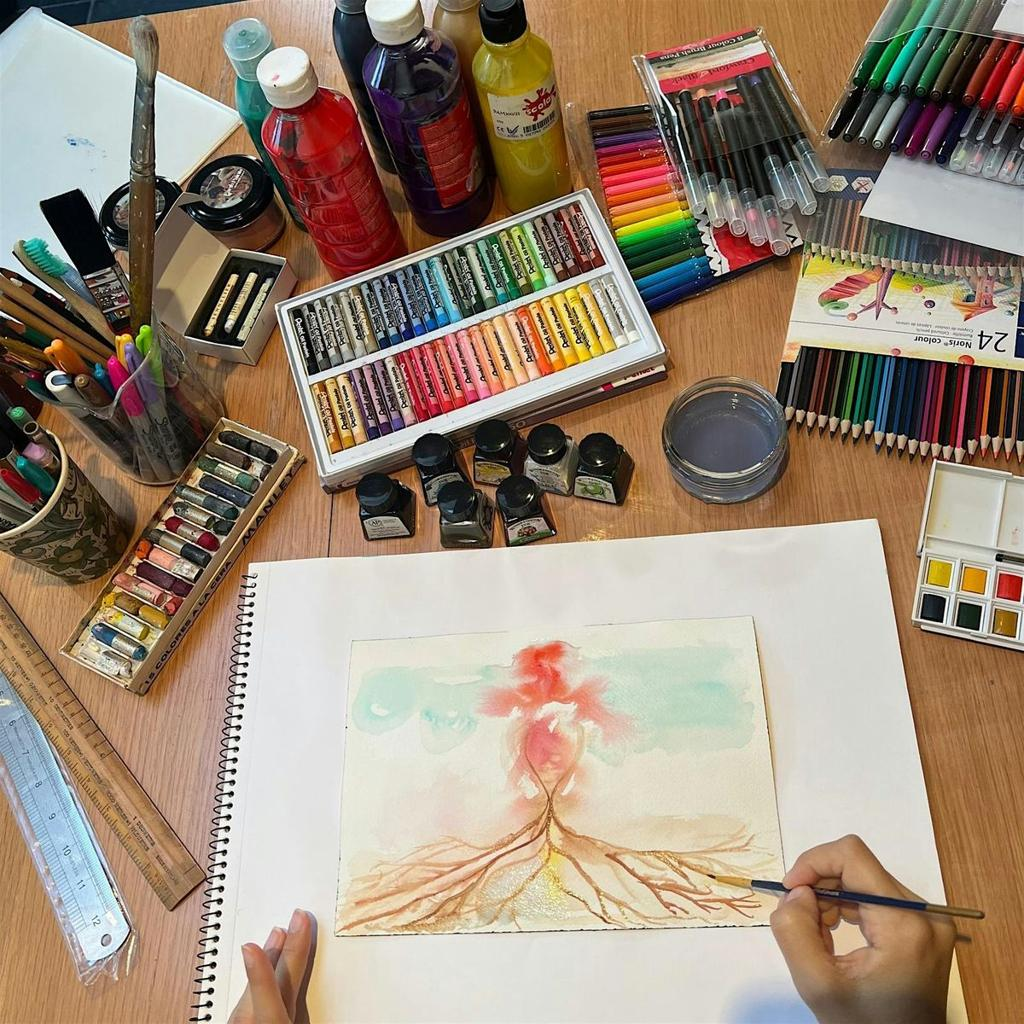
Draw a tree. Let its roots represent what grounds you, its trunk your present strengths, and its branches what you're growing toward.
Art, nature, and the nervous system
Art making encourages repetitive movements, sensory experiences, and attention to the present that can support grounding.
Art-making can help people notice bodily sensations and emotional shifts and sync with nature.
Art therapy is especially healing from trauma in the sense of restoring the experience of choice and agency: selecting materials, changing an image, deciding when to stop.
Reconnecting with ancestry, culture, and the land
Many communities have longstanding traditions involving weaving, pottery, gardening, textiles, storytelling, and working with natural materials.
Creative practices can offer opportunities to reflect on family history, cultural identity, belonging, and intergenerational experiences.
Eco art can help reflect on how displacement, migration, urbanization, and environmental change can affect people's sense of connection to place.
You don't need to be an artist—or even outdoorsy
People often feel intimidated by art-making because they fear doing it wrong. Perfectionism can itself become meaningful material for exploration. Creative expression can happen in a backyard, public park, community garden, or apartment. A therapist can adapt activities for accessibility, climate, sensory preferences, and emotional needs.
Closing: Different doorways, one goal
Sometimes healing begins with a conversation. Sometimes it begins with a walk, a drawing, or noticing the texture of a leaf. Art and nature offer opportunities to move beyond analyzing our experiences and begin relating to them differently.
To explore nature-based therapy contact Javier in Texas or California, or art therapy with Juanita in New York.
About the Author
Juanita Viera, LCAT, is a Licensed Creative Arts Therapist and founder of The Art of Integration, a psychotherapy practice in Williamsburg, Brooklyn. She integrates creative arts therapy, trauma-informed psychotherapy, somatic approaches, and ketamine-assisted psychotherapy to help individuals and couples move beyond insight and create meaningful change. She offers in-person therapy in Brooklyn and virtual therapy throughout New York State.
